Complete Homeowner Guide
What Is a Warm Roof & How Does It Work?
Warm roof conversions are our speciality. Here is a plain-English breakdown of what sits above your ceiling, why old cold roofs fail, and why a warm EPDM roof transforms the room underneath.
Cold Roof vs Warm Roof
The big difference is where the insulation sits. In an old cold roof, insulation (if there is any at all) sits between the joists, leaving the timber cold and relying on tricky air gaps to vent moisture. In a warm roof, the insulation sits continuously above the joists, wrapping the whole structure like a duvet.
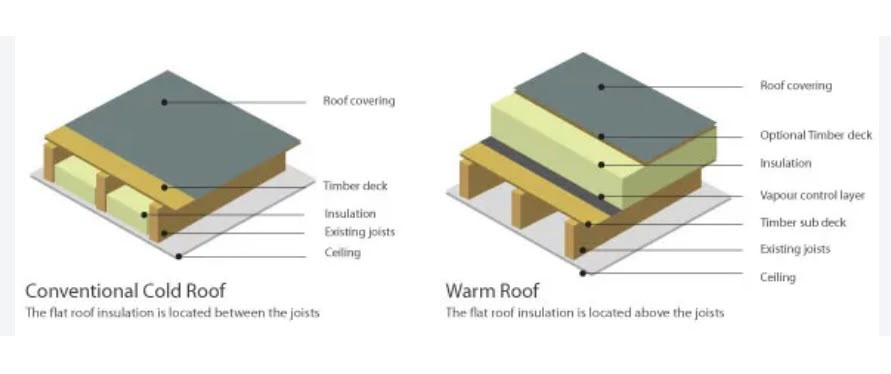
Conventional Cold Roof
- • Insulation squeezed between joists — timber acts as a cold bridge.
- • Warm indoor air hits the cold underside of the deck and condenses.
- • Needs constant cross-ventilation that often gets blocked over time.
- • Hidden damp leads to swollen boards, mould and rotten joists.
Modern Warm Roof
- • Continuous rigid insulation above the deck — zero cold bridging.
- • Vapour control layer blocks moist indoor air from reaching cold zones.
- • Joists and deck stay at room temperature — dry and rot-free.
- • Warmer in winter, cooler in summer, lower heating bills.
Every Layer Explained (Bottom to Top)
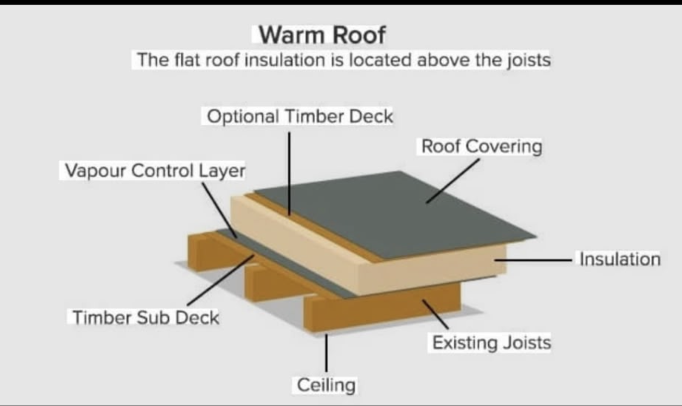
Ceiling & Existing Joists
Your internal plasterboard ceiling and structural roof joists stay untouched from below — no mess inside your room.
Timber Sub-Deck
A solid structural deck (such as 18mm OSB3 or WBP plywood) fixed over the joists to give a flat, rigid base.
Vapour Control Layer (VCL)
A continuous airtight barrier laid over the sub-deck. It stops warm, moist indoor air (from showers, cooking and breathing) from rising into the roof.
Rigid PIR Insulation Board
High-performance insulation (typically 120mm–150mm PIR) laid directly above the VCL. Because it sits above the joists, there is no cold bridging through the timber.
Optional Timber Top Deck
Depending on the insulation board (tissue-faced or plywood-bonded), a top deck provides a smooth, impact-resistant surface for the rubber.
EPDM Rubber Roof Covering
A single-piece, seamless EPDM rubber membrane fully bonded on top — UV-stable, completely waterproof and built to last 50+ years.
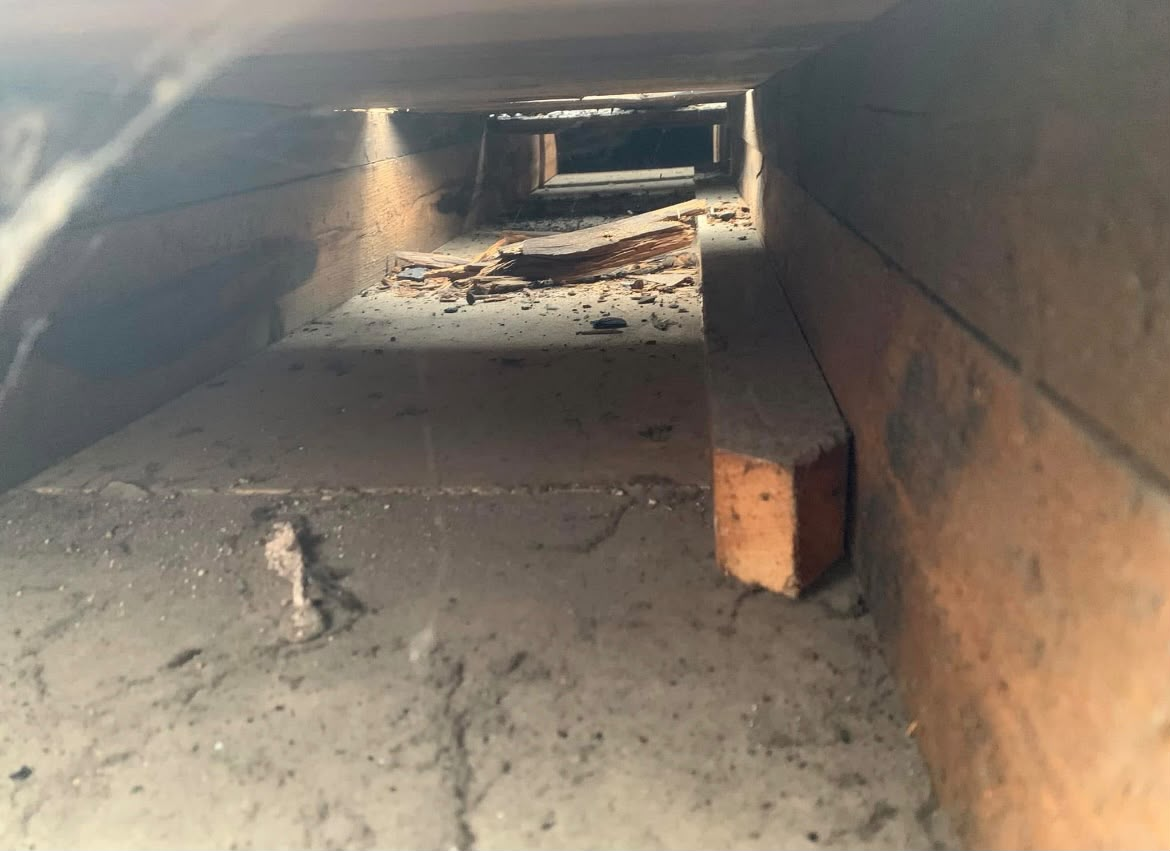
What We Usually Find in Rugby
Typical Rugby Dormer Insulation (There Isn't Any!)
This is a real photo taken inside a dormer roof right here in Rugby. When we open up older dormers and extensions, it's common to find completely empty voids between the joists — meaning heat pours straight out of the bedroom ceiling in winter and the room turns into an oven in summer.
Converting to a warm roof with rigid PIR insulation and a single-piece EPDM rubber membrane makes an immediate difference you feel on the very first night.
Key Benefits of a Warm Roof
Warmer Rooms
Stops heat escaping through flat ceilings and dormers.
No Condensation
Keeps the dew point outside your timber deck and joists.
Lower Energy Bills
Less boiler run-time to keep extensions and bedrooms cosy.
50+ Year Roof
Topped with seamless, manufacturer-guaranteed EPDM rubber.
Common Questions
Tap any question below for a straight answer about warm roof conversions.
Thinking About a Warm Roof Conversion?
Send Tim a quick text on 07927 154101 and we'll pop round for a look.